
From Kayemo News
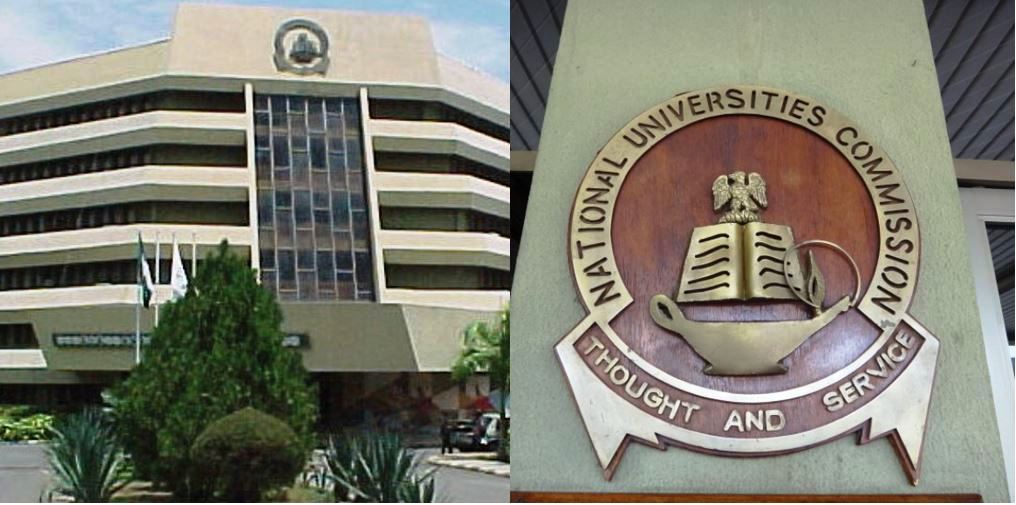
The National Universities Commission, NUC, has issued a strong warning over the increasing cases of what it described as indiscriminate conferment and misuse of honorary doctorate degrees in Nigerian universities.
This is as NUC stressed that sanctions will be imposed on both institutions and individuals who violate its rules.
The Commission, in a statement on Thursday unveiled 16-point guidelines for the award and proper use of honorary doctorates, in line with the Education Act (National Minimum Standards and Establishment of Institutions), CAP E3, Laws of the Federation of Nigeria (2004), and its statutory mandate.
“The commission is deeply concerned about the increasing misuse and indiscriminate conferment of honorary doctorate degrees in the Nigerian University,” the statement read.
According to the statement, the new guidelines aim to regulate the conferment process, protect academic integrity, and preserve the credibility of Nigerian universities. All universities and degree-awarding institutions are directed to adhere strictly to the provisions, which are aligned with the Keffi Declaration of 2012, signed by all vice-chancellors.
The Commission noted that honorary doctorates, whether awarded locally or abroad, are purely ceremonial and must not be treated as equivalent to earned academic doctorates.
“These guidelines are issued to protect the integrity, reputation, and global standing of the Nigerian university system. All stakeholders must comply fully with the procedures for conferment and use of honorary doctorates. Regulatory sanctions will be applied against any institution or individual found in breach of these rules,” NUC added.
Below is the full list of the NUC-approved guidelines, as stipulated by the NUC:
Institutional eligibility: Only approved universities (either public or private) are eligible to award honorary doctorate degrees in Nigeria.
Maturity requirement: Only universities that have graduated the first set of PhD students are eligible to award honorary doctorate degrees in Nigeria.
Purpose of the award: The purpose of the award shall be to recognize exceptional and sustained contribution, reflect institutional values, and ensure diversity.
Criteria for the award: The criteria for the award shall be clear and transparent with balanced representation across gender, race, nationality, and discipline to avoid conflicts of interest. All procedures for selecting and awarding honorary doctorate degrees shall be clearly stated on the official website of the awarding institution and made accessible.
Recipient eligibility: Self-nominated candidates and elected or appointed serving public officials are excluded.
Confidentiality: All aspects of the honorary doctorate degrees shall be treated with the highest level of confidentiality, and nominees shall only be contacted after their nominations have been approved by the Senate and Governing Council.
Award nomination: All nominations shall be processed by the statutory committee.
Approval: All nominations require University Senate and Governing Council approval.
Number of awards: The number of awards at each convocation shall not exceed three (3).
Nomenclature and title: All honorary doctorate degrees shall contain the nomenclature or title Honoris Causa. For example: Doctor of Science (Honoris Causa), D.Sc. (h.c.)
Conferment: Shall be in-person at the ceremony. In exceptional cases, the conferment may be done virtually or in absentia; it may be awarded posthumously.
No fee: Honorary doctorate degrees shall be conferred without any fee or expectation of payment from the recipient.
Usage: The recipients are at liberty to use the approved nomenclature or title of the honorary doctorate degree such as Doctor of Law (Honoris Causa) or LL.D. (h.c.); or letters (Honoris Causa) or D.Sc. (h.c.) after their names. However, they are not permitted to use “Dr.”, which is reserved for holders of earned degrees and medical professionals. Additionally, they are not permitted to use the honorary doctorate degree to practice as scholars or professionals, oversee administrative units, or supervise research work.
Orientation: All awarding universities shall provide both written and verbal orientation to recipients on how to use the award.
Publication of records: All universities shall regularly publish names of honorary doctorate degree recipients on their official website and make it accessible to the public, in order to uphold transparency.
Revocation policy: All awarding universities shall provide a formal mechanism to rescind awards if a recipient is convicted of fraud, or has engaged in any unethical conduct that is inconsistent with the values of the awarding institution. {Daily Post}