
From Kayemo News
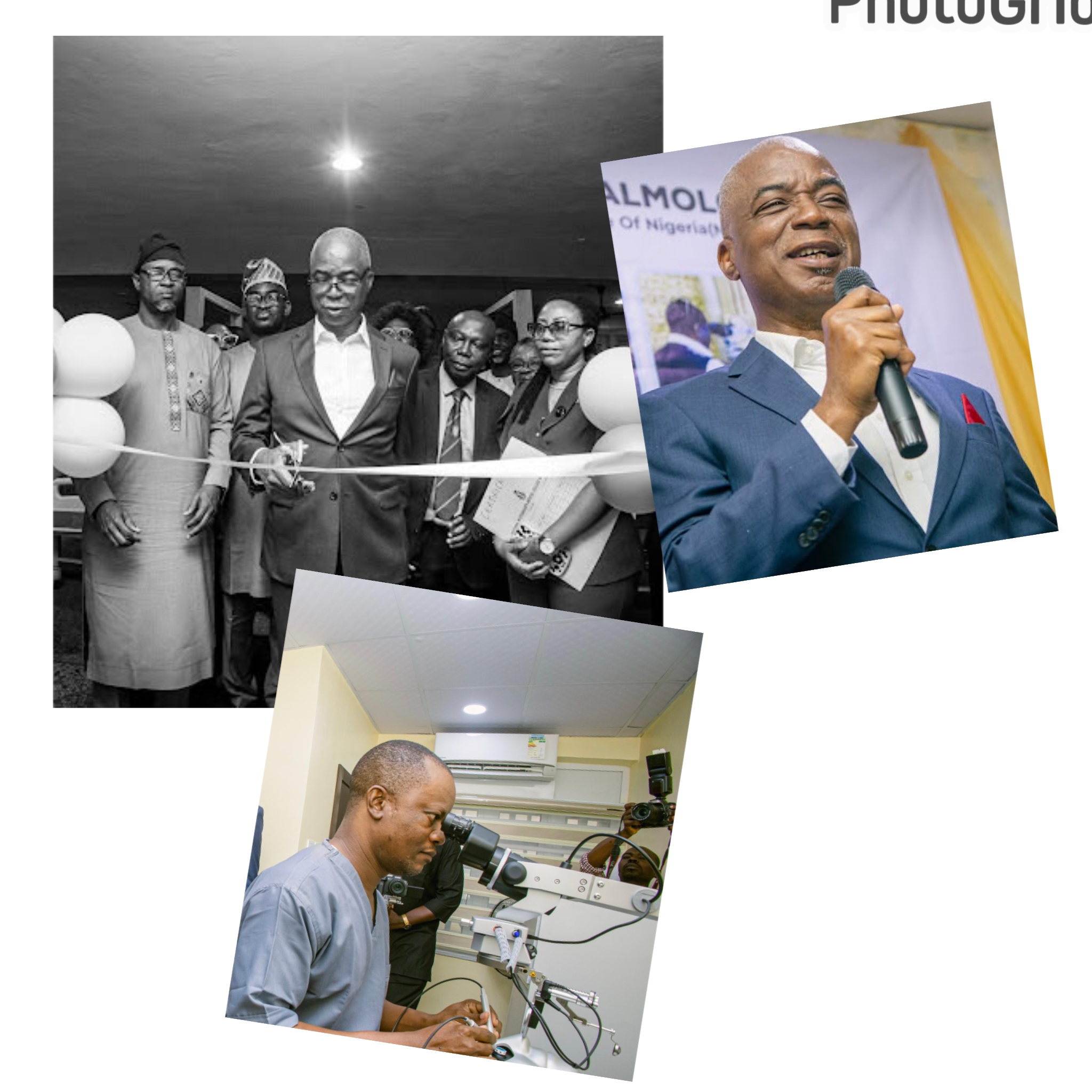
Nigeria has recorded a major milestone in ophthalmic medical education with the unveiling of West Africa’s first EyeSi Surgical Simulator and the inauguration of the Gbemisola Olowolafe Centre for Ophthalmic Surgical Simulation at the Guinness Eye Centre, Lagos University Teaching Hospital (LUTH).
The development is expected to strengthen specialist training and improve patient outcomes across the region.
The project, delivered through a partnership involving the Faculty of Ophthalmology of the National Postgraduate Medical College of Nigeria, LUTH and the Tunji Olowolafe Foundation, is designed to provide world-class simulation-based training in phacoemulsification cataract and vitreoretinal surgery for ophthalmologists in Nigeria and West Africa.
Speaking at the inauguration at LUTH on Friday, the Chairman of the Foundation, Dr. Tunji Olowolafe, called for a fundamental shift in Nigeria’s approach to professional development, stressing that continuous education and retraining are essential to improving standards of practice and preventing professional obsolescence.
Explaining the Foundation’s decision to support the project, Olowolafe, who is the Chancellor of Ekiti State University, EKSU, disclosed that the initiative was inspired by a presentation made by the Faculty of Ophthalmology during its 2025 Faculty Lecture.
“Sometime in July 2025, there was a Faculty Lecture of the Faculty of Ophthalmology. Some of your colleagues, led by Dr. Festus Oshoba, engaged us. They shared their vision for the machine, their plan, and what they needed to get started. I was deeply impressed, and right then, we decided to help acquire the EyeSi Surgical Simulation Machine,” he said.
Highlighting the significance of the technology, Olowolafe explained that the simulator provides surgeons with a safe environment to repeatedly practise delicate surgical procedures, receive objective feedback and steadily improve their competence without risking patient safety.
“This machine gives surgeons—whether qualified last year or thirty years ago—a place to practice delicate movements over and over. It gives honest feedback, and it lets you come back the next day to get better,” he stated.
The renowned entrepreneur and acedemic lamented what he described as the widespread culture of treating professional certification as the end of learning rather than the beginning of continuous development.
“If I may be candid, across almost every profession and vocation in Nigeria, we don’t place enough value on continuous education. Once we qualify, we collect a certificate, and we consider the job done for life. We make the mistake of thinking training is only for things we do not know. But the most vital training is in what we already know—reminding ourselves, over and over again.”
According to the Scholar, the EyeSi Surgical Simulator not only reinforces existing knowledge but also equips practitioners with emerging techniques while helping them unlearn outdated methods.
“This machine doesn’t care where or when you qualified. It lets you train, and it forces you to unlearn—which is usually the harder part. When you train people properly, everything improves: patient outcomes, livelihoods, and the nation as a whole.”
Olowolafe who is also the Pro- Chancellor of Miva Open University, advocated the establishment of similar simulation centres across medical institutions in Nigeria to institutionalise continuous professional retraining.
He assured that the Tunji Olowolafe Foundation remains committed to supporting innovative interventions that will position Nigerian ophthalmology among the leading medical specialties on the African continent.
Expressing appreciation for the honour bestowed on his late wife, Olowolafe said: “On behalf of the entire Olowolafe family, we are deeply thankful to the Faculty of Ophthalmology for honoring my late wife, Gbemisola Olowolafe, by naming this Centre after her. It means more to us than words can fully express.”
He also appreciated the National Postgraduate Medical College of Nigeria and LUTH for providing a home for the Centre at the Guinness Eye Centre.
In his remarks at the event graced by distinguished figures, Chairman of the Faculty of Ophthalmology of the National Postgraduate Medical College of Nigeria (NPMCN), Professor Charles Bekibele described the inauguration of the Centre as the fulfilment of a vision that had spanned more than three decades.
According to him, many Nigerian trainee ophthalmologists have been compelled to travel to India, Pakistan and Bangladesh for specialised training in phacoemulsification cataract and vitreoretinal surgery.
He expressed confidence that the facility would revolutionise ophthalmic surgical training in Nigeria, improve patient outcomes, reduce surgical complications and position the country as a regional hub for advanced ophthalmic education in West Africa.
The Gbemisola Olowolafe Centre for Ophthalmic Surgical Simulation is equipped with immersive virtual reality technology that offers step-by-step training in phacoemulsification cataract surgery and vitreoretinal surgery. The Centre recently admitted its inaugural cohort of six trainees, including participants from Kaduna and Onitsha.
The pioneer trainees had described the simulator’s tissue-response mechanism as remarkably realistic and praised its ability to facilitate the coordinated use of both hands during surgical procedures. They expressed confidence that the facility would significantly reduce the need for Nigerian ophthalmologists to travel overseas for advanced phacoemulsification cataract surgery training.
With the deployment of the cutting-edge simulation technology, the Centre is expected to strengthen ophthalmic education and produce a new generation of highly skilled eye surgeons for Nigeria and the wider West African region.